Reach online success with ease using this Home Business Success Kit |
Friday, 2 November 2012
Re: Re: Look what i found here...

Monday, 27 August 2012


Friday, 10 August 2012
12 Ingenious Gadgets & Technologies for the Blind
B-Touch Mobile Phone
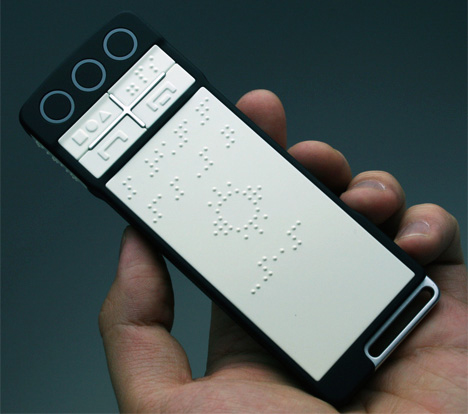
Imagine how much easier it would be for the visually impaired to perform everyday tasks like talking on the phone, reading a book and recognizing objects if they had an accessible all-in-one device like theB-Touch Mobile Phone concept. Designer Zhenwei You incorporated braille, voice systems and optical reading devices
Braille Rubik Cube
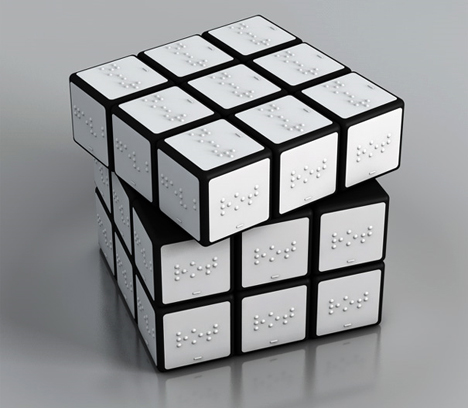
It may take a bit more time to actually feel out the face of each individual square in a Rubik’s cube than to attempt solving it visually with colors, but this braille-equipped version is certainly an interesting challenge even for those who aren’t visually impaired.
Safe and Sanitary Mug
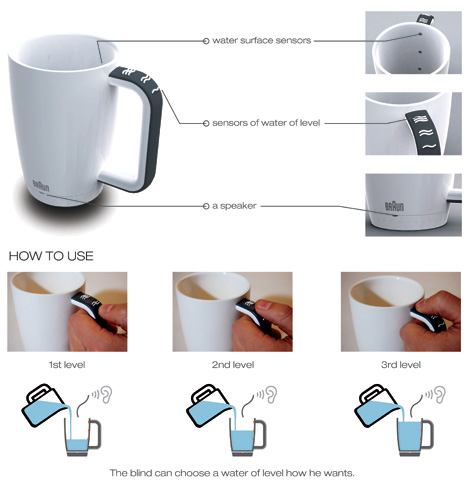
How would you like having to burn yourself on hot coffee just to keep track of how much you’re pouring into a mug? Most blind people have to use their fingers, but the awesome Braun Bell Concept Mug by Sang-hoon Lee and Yong-bum Lim makes the process much more safe and sanitary. The mug emits a certain sound when liquid reaches each water sensor.
The Eye Stick – Walking Stick that Sees
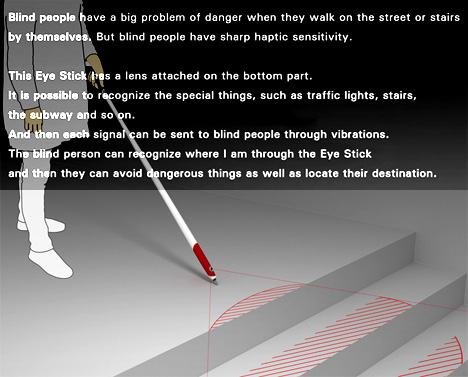
Sonic vibrations provide one of the most accurate ways for the visually impaired to get their bearings in an environment, so equipping the end of a walking stick with a little sensor can instill confidence even when dealing with stairs and other potentially dangerous scenarios.
Tactile Flash Cards for Learning
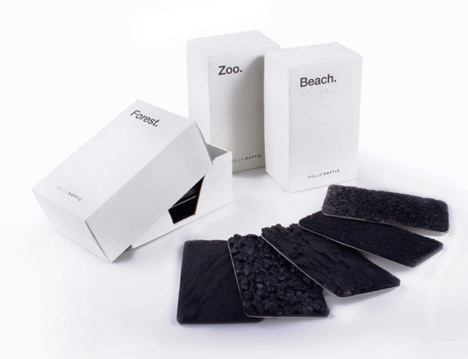
When you can’t see, you rely upon hearing and, of course, touch in order to learn – so tactile flash cards imprinted with the name of an object in braille on one side and a physical texture on the other are a particularly effective way to become familiar with new things.
Feel the Time
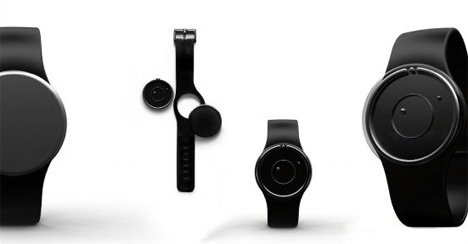
The design of the ‘Feel the Time’ watch is so brilliantly simple, it’s amazing that it’s not already commercially available. The minimalist black face features two separate discs, each with one tiny nub – one that signifies the hour, and one for the minute. A break in the outer circle at the 12 o’clock mark acts as a guide to get an accurate reading.
Braille E-Book
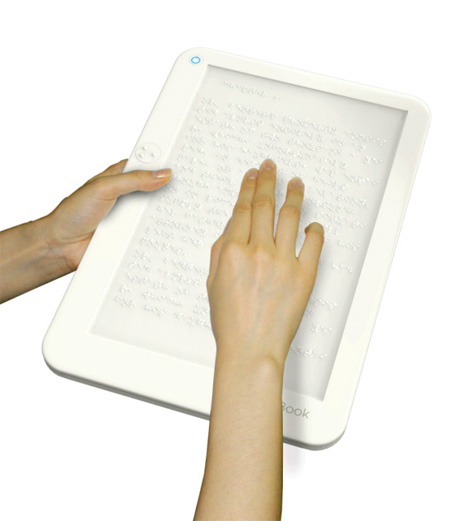
It’s hard enough to lug around multiple heavy books, but doing so with expensive, extra-bulky braille books is downright impossible. So as convenient as E-readers are to those with sight, they would be far more so to the blind. This Braille E-Book concept, which dynamically changes the surface pattern with an electromagnetic signal, could revolutionize books for the blind.
Sign Language Voice Translator
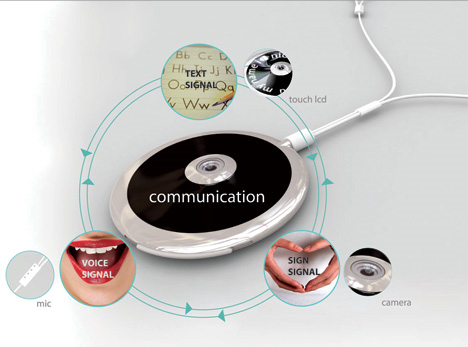
One particularly troubling communication scenario is that of a deaf person and a blind person, unable to hear or see each other’s voice or gestures, respectively. So the Sign Voice Language Translator is an interesting prospective solution – a gadget on a necklace that converts gestures to voice and voice into written text.
Navigation Bracelet
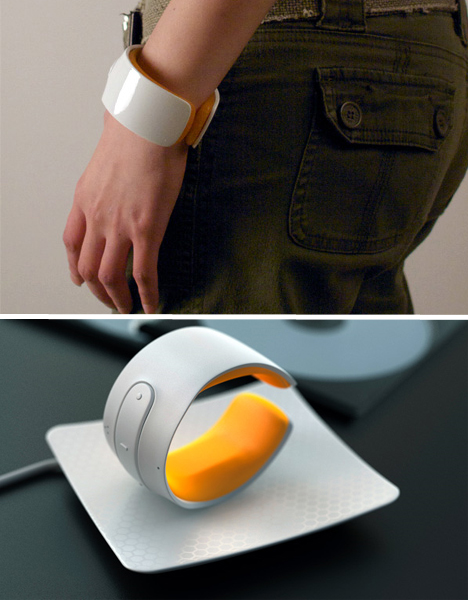
What looks like a modern piece of plastic jewelry is actually a navigation system that uses GPS, voice commands and audio and haptic feedback to provide the blind with a level of independence that is currently impossible for many. Yanko Design notes that it could benefit the sighted as well, simply making it fast and easy to navigate a new city.
Touch Color Painting Tablet
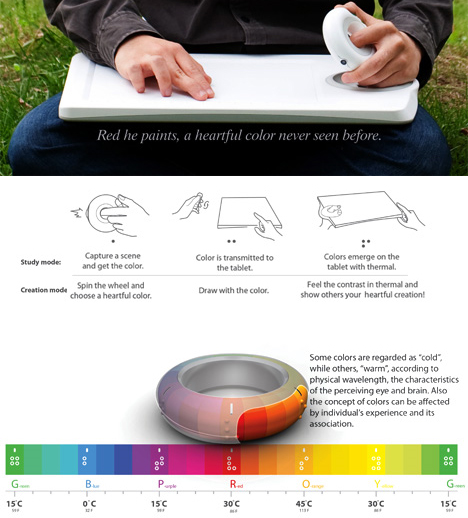
Sure, people without sight can paint and often produce stunning artwork without ever having a real sense of color. But when color temperature becomes literal, cool blues and hot reds are differentiated in a new way that permits far more creative expression.The Touch Color tablet uses thermal energy and a hand-held color wheel to create works of art. The color wheel can even capture actual colors from a user’s environment and transmit it to the tablet.
Color Sensor Helps See with Sound
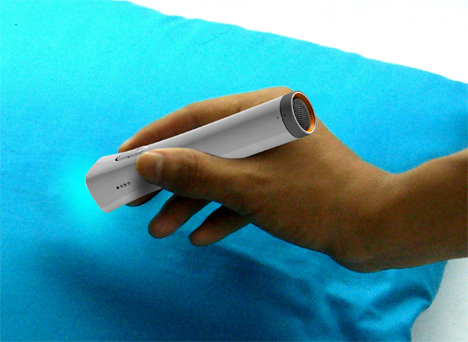
Art is invaluable, but why not bring the ability to sense colors into everyday life with a more practical application? The Bright-F Color Sensor can help the blind “see” colors by associating each color with a particular sound – a huge help when sorting laundry or picking outfits.
Braille Polaroid Camera
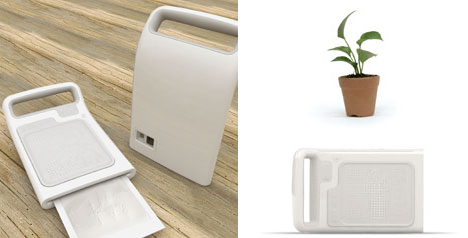
Touching an object may help a blind person get a sense of what it is, but unlike the sighted, they can’t use photographs to capture and keep memories. The Braille Polaroid Camera, however, acts as an instant braille printer, translating the basic shape of an object into texture so that the blind can collect “images” in an album.
Thursday, 9 August 2012
Tuesday, 7 August 2012
Experience with Dark and Light-Himani Auplish
The reason I opted for 'Space and Place A' was because I was really excited to work on this project called 'Dark and Light'. We started working on visiting card which were for both visually able and visually impaired. I started with some research on braille and then made a simple card with my name written with braille on it. The main challenge in this project was to get the right paper, tools and to understand the right way to braille. We had to poke a pin behind a 400gsm paper and write the letters in mirror image.
After the visiting cards we moved on to making t shirts for people who cannot see but can only feel the clothes they are wearing. We had to get the right cloth and add textures to it. I made a simple design on a kurta made out of beads, I also added 'ghoonghroo' to add the element of sound to it.
Then we were sent out to find out how blind people interact in public spaces, institutional spaces and transportation. We are asked to gather information about the existing policies for the blind in all these sectors. We were divided into groups and my group was handling the transportation part. We further divided ourselves and covered different sectors. I went to the airport with three more people and interviewed a lot of people. Everyone's response was very general, everyone seem to be very sympathetic towards the blind and everyone is always there to help them. Maybe this is the normal practice but I feel that there is more to this story and we need to talk to people who might tell us the actually situation.
After understanding the people and the infrastructure outside we took the initiative to turn our campus 'Srishti N3' into a blind friendly institutional space.It started with studying our space here and we found out that there were a lot of changes that were necessary, for example the bathrooms didn't had a raised platform thus making it unsafe for the visually challenged. Me and four more people worked on ramps that were placed outside the washrooms, thus making the washrooms easily accessible for the blind. Then I also helped my other group mates to make sign boards in the washroom. By the end of it there was signage on every floor and all the doors had braille on them, the lift buttons had braille sheets and there was a manual made for the visually abled and the visually impaired.
At the end of three weeks I have realized that the life of blind people is no different than ours, their needs their behavior is all identical. The only thing different about them is that they are differently abled. We don't have to sympathize with them because they have abilities than most of us lack. Three weeks have been really amazing and I am looking forward for more.
Reflection- Agrim Singhal
Space and place- Section A
Module: Dark and light
Facilitator: Mr. Narendra
While Choosing from the various courses offered, I had problems choosing the right one because all of them were so interesting at the same time challenging. But now, after one module of the course is over I think I chose the right one. Taking into consideration of the blind people we explored various aspects to help them.
In this course, we have covered various aspects keeping both the visually impaired and the visually enabled in mind. Covering areas such as learning braille, creating products for the blind, surveying the city of yelahanka on how many blind people actually come to the public areas, the various problems that they face from day to day, etc.
On day one of this course, I realized the problems faced by the blind when I blindfolded myself and tried to reach the other corner of the hall. The other human senses need to be really sharp as you cannot see. I also made visiting cards in braille. Braille is not an easy thing to learn and many things such as the spacing between the dots needs to be kept in mind. As the course moved on I surveyed the people in the city as to how many blind people come to the city and what kind of products are available for them. We also studied the policies that various countries have on the blind and what special preferences are given to them. As the course progressed, we were divided into various groups and we were to make srishti N3 campus blind-friendly. I was in the group that was doing the washrooms. Making ramps for the blind, putting braille notices for the various utilities in the washrooms, etc. Doing all this made me realize what problems blind people face from day to day.
I think at the end of this course I have learnt a lot about the visually impaired and as an upcoming designer I will continue helping them by trying to make more products for them that will help them overcome the problems they are still facing.
THE UNSEEN WORLD - Ankita Mirani
 this poster to create awareness to be kind with the blind people.
 visiting cards for blind.
The first thing that comes to your mind when u say blind is sympathy....
But that is not what blinds need..
I think all we have to do is give them a push help them little but make them as independent possible that does not mean no help when actually needed.
This experience taught me everybody is sympathetic to them.
But is that really needed??
Be empathetic not sympathetic.
They are just as normal as you are..
You don't treat all people who are sick this way... do you??
All they need is a little help.
By this experience I saw the world by trying to be in their shoes.
Life isn't that easy but just when one is visually impaired your other senses become stronger than us normal people.
They know and see things that you don't even notice with your eyes.
This experience we went through all the problems that they face dealt with it
Did a survey tried coming up with ideas for their clothing visiting cards.
We went out to the streets of yelahanka to know how the others dealt with them.
We got all kind of responses.
My personal experience was an amazing one.
Now whatever design comes my way at least once blind perspective will cross my mind.
It gave me a different outlook. A look from their view.
Give them a chance and they will fly.
Reflection-Aliasger Dhariwala.
Space and Place [Section A]
Module:-Dark & Light
Facilitator:- Mr. Narendra.
While choosing my projects for the 1st semester here at Srishti I found Dark and Light as the most appealing module from all the others as it really interested me and made me want to know more about it. Little did I know that over the next few weeks of college I'd have a rollercoaster ride including documentaries, learning braille, working on assignments to create products for the blind, carrying out surveys and actually learning the problems faced by the blind people.
Day by day as the course progressed I learnt to look at the visually impaired in a different way and the whole fixed image about them and misconceptions started to go away. For basics I realized how we associate the word dark with negative notions every time almost unconsciously and how much a person's personal space is important to them. Just because a person is visually impaired doesn't mean that he was completely dependent on someone or that he needs sympathy all the time. As I worked on different projects a blind person's independence became an essential priority.
The course involved everyone to work on certain things individually and certain things as a group. The group work included brainstorming and working on different aspects and suggestions by group members and really helped us learn a lot because everyone had different ideas and concepts and everyone of them had points that would work and points that wouldn't, trying to overcome those points and delivering something at the end of it was a mind blowing experience.
Even thought this was the first very project here at Srishti, it most importantly influenced my thinking. This module has made me think greatly about the visually impaired, and I think I will take their disability into consideration whenever I work on a project in the future.
Blind Exploration - Sarayu Narasimhan
The blind project was very systematically explored although we weren't able to complete it entirely. The systematic structure of the course is what stood out to me. Abstract ideas and thoughts were explained very well through the documentaries Narendra showed us. These thoughts remained abstract but I felt I had a grip over the crux of the thoughs.
Our class approached this course by doing, in my opinion, a fairly easy project - to design a braille business card. After Narendra gave us this instruction, I proposed to create a card that will not only be braille enabled, but could also be used for the visually capable. After looking at the braille alphabet, I saw a pattern. The braille alphabet resembled the English alphabet in that the braille alphabet seemed to catch essence of the English letters. I managed to combine both braille and the English alphabet in my prototype of a visiting card.
Our class approached this course by doing, in my opinion, a fairly easy project - to design a braille business card. After Narendra gave us this instruction, I proposed to create a card that will not only be braille enabled, but could also be used for the visually capable. After looking at the braille alphabet, I saw a pattern. The braille alphabet resembled the English alphabet in that the braille alphabet seemed to catch essence of the English letters. I managed to combine both braille and the English alphabet in my prototype of a visiting card.
Our next task was to create a t- shirt that could be worn by the blind. I created an interactive t- shirt that has strips of paper stuck on it with 2x3 grids. My idea was to stick pieces of double-sided tape in each grid to create words.
My group's next step was to list the problems a blind person would face while travelling around Bangalore city. We did this by interviewing passengers, bus drivers, conductors, security guards and students on the problems they think exist, and their solutions to these problems. We had fortunate stroke of serendipity when we met two blind people on our bus who told us that the citizens of Bangalore were more than willing to help them during their commute.
Our final task was to equip the N3 campus with whatever would make it blind friendly. I was involved in making floor plans for the basement as well as the 3 floors and decided to emboss them so that the blind can feel these maps while walking around the campus.
My group's next step was to list the problems a blind person would face while travelling around Bangalore city. We did this by interviewing passengers, bus drivers, conductors, security guards and students on the problems they think exist, and their solutions to these problems. We had fortunate stroke of serendipity when we met two blind people on our bus who told us that the citizens of Bangalore were more than willing to help them during their commute.
Our final task was to equip the N3 campus with whatever would make it blind friendly. I was involved in making floor plans for the basement as well as the 3 floors and decided to emboss them so that the blind can feel these maps while walking around the campus.
As I said in the beginning of this write up, the systematic, step-by-step approach to this course was what appealed to me the most. Since this was our first project, I didn't know what to expect while working in a group, but I understand now that group work is definitely more challenging than individual tasks. At the same time it opens you to others' ideas that may at times be better than yours.
AND.EVERYBODY.RESPECTS.YOU. - Saumya Pankaj
(a documentation on our help towards the visually impaired.)
"IT'S A TERRIBLE THINjG TO SEE AND HAVE NO VISION"-HELEN KELLER
POSTER!
Born with deficient sight and hearing, Helen Keller morphed her greatest curse into the mightiest blessing for all mankind by sensitizing society to think for the blind ,not as disabled, but as differently abled'. The space and place programme envisages, re-echoing and reinventing Keller's urgency to sensitize and equip the modern thinking, to absorb the visually different in the mainstream work culture.
The space and place project empowered me to visualise the impediments that don't allow visually impaired people to lead a normal life. Heavy footwork research revealed startling inadequacies in a system ridden with blind. Shopkeepers, drivers and people around them treat them with sympathy, not 'empathy', allowing them temporary discounts and freebees, which unintentionally humiliate or hurt the sentiments of the visually impaired.
Work places are not quite well equipped to deal with such customers or workers and that is why they end up on the reservation lists. Designing visiting cards put us literally in the shoes of the blind, making us understand the signature of shape, size, texture, colour and aroma of the things to be any real help to them.The appalling neglect in putting up public and
VISITING CARDS!

Embassadors of goodwill ; what better way to get into the minds and hearts of everyone than on braille cards,sought of advertising ,the potential competitive consumers,who are well informed in market survey and socially active. Th e card to be made a little bigger is better,allowing the blind to 'percieve'the content.
SHIRTS!


SIGN BOARDS!
We are now making an endeavour,to make our college blind friendly,to start with.bright boards,(in english as well) with brailled room numbers have been put up everywhere needed,to guide all visitors,especially the ones visually impaired
We are now making an endeavour,to make our college blind friendly,to start with.bright boards,(in english as well) with brailled room numbers have been put up everywhere needed,to guide all visitors,especially the ones visually impaired
The whole experience has been compellingly educative with residual feeling of frustration and revealed how all of us take sight for granted and have little or no time for contributing whatever little we can ,to the differently abled. This has truly envisioned me to think for others and hopefully design for a better academic and social environment for them.
"KEEP YOUR FACE TOWARDS THE SUNSHINE,AND YOU'LL NEVER SEE THE SHADOW"-Helen Keller
Subscribe to:
Posts (Atom)